Understanding Amazon AWS Web Hosting Pricing: A Comprehensive Guide and Optimization Strategy
#Understanding #Amazon #Hosting #Pricing #Comprehensive #Guide #Optimization #Strategy
Understanding Amazon AWS Web Hosting Pricing: A Comprehensive Guide and Optimization Strategy
Alright, let's talk about Amazon Web Services. For anyone dipping their toes into the vast ocean of cloud computing, especially when it comes to hosting a website, the sheer scale of AWS can feel, well, intimidating. You hear whispers of incredible power, unparalleled flexibility, and then, almost immediately, stories of runaway bills, unexpected charges, and a pricing structure that feels like it was designed by a committee of quantum physicists and ancient riddle masters.
I get it. I’ve been there. I remember my first few AWS bills, staring at lines of services I barely recognized, wondering if I'd accidentally launched a satellite or something. It’s enough to make you want to retreat to the familiar, predictable world of shared hosting. But here’s the thing: once you understand AWS pricing, once you peel back the layers of complexity, you realize it’s not just powerful; it's incredibly cost-effective when used correctly. The trick isn't just knowing what each service does, but understanding how it charges you, and more importantly, how to optimize those charges for your specific web hosting needs.
This isn't going to be some dry, technical manual. Think of me as your seasoned guide, the one who’s made the mistakes, learned the hard lessons, and now wants to save you from similar headaches. We’re going to dive deep, dissecting the core principles, exploring the key services, and uncovering the strategies that will turn those intimidating AWS bills into manageable, predictable expenses. We’ll talk about the nuances, the hidden costs, and the absolute best ways to make AWS work for your budget, whether you’re running a small blog or a bustling e-commerce empire. So, grab a coffee, settle in, and let's demystify AWS web hosting pricing together.
The Foundational Principles of AWS Pricing for Web Hosting
Before we get lost in the labyrinth of individual service costs, it’s absolutely crucial to grasp the underlying philosophy that governs all AWS pricing. Without this foundational understanding, you’ll constantly be playing catch-up, scratching your head at line items, and missing out on significant optimization opportunities. These aren't just abstract concepts; they are the bedrock upon which every single charge is built, and mastering them is your first step towards becoming an AWS budget ninja.
The "Pay-As-You-Go" Model: Core of AWS Pricing
This is it, the grand daddy of all AWS principles, the very heartbeat of its financial model: "pay-as-you-go." It sounds simple, almost too good to be true, doesn't it? And in many ways, it is a revolutionary shift from traditional hosting models. But let's unpack what it really means for someone hosting a website. In the old days, you’d buy a hosting package – a dedicated server, a VPS, or shared hosting – and you’d get a fixed set of resources for a fixed monthly fee. Whether your website was humming along with thousands of visitors or sitting idle, gathering digital dust, you paid the same amount. It was like buying a 12-lane bowling alley for your weekly game night, even if you only ever used one lane. You were paying for potential, not actual usage.
AWS flipped that script entirely. With the pay-as-you-go model, you are charged only for the specific resources you consume, down to the second, the gigabyte, or the request. If your website experiences a surge in traffic for an hour, you pay for the extra compute power, bandwidth, and database capacity for that hour. When the traffic subsides, your costs drop back down. This granular billing is incredibly powerful because it aligns your expenses directly with your actual demand. It means you’re not overpaying for idle resources, and you’re not stuck with a server that suddenly can’t handle a viral post or a flash sale. It truly is a dynamic relationship between your usage and your bill, a stark contrast to the often wasteful fixed-cost paradigms of yesteryear.
However, and this is where the "expert" part comes in, this flexibility is a double-edged sword. While it saves you from overprovisioning, it also means that every single action you take, every service you spin up, every gigabyte of data you transfer, has an associated cost. If you're not diligent, if you leave resources running that you no longer need, or if your application isn't optimized for efficiency, those micro-charges can snowball into a surprisingly hefty bill. This is why understanding the specifics of each service's pricing is paramount. It’s not just about turning things on; it’s about turning them off when they're not needed and configuring them precisely for their task. The pay-as-you-go model is a fantastic enabler of agility and cost-efficiency, but it demands a level of awareness and proactive management that traditional hosting rarely required.
Elasticity and Scalability: Cost Implications
Hand-in-hand with the pay-as-you-go model are the concepts of elasticity and scalability. These aren't just buzzwords; they are fundamental design principles that directly impact your web hosting costs on AWS. Scalability, in simple terms, is the ability of your infrastructure to handle increased load by adding more resources. Elasticity takes that a step further, meaning your infrastructure can automatically scale up and down in response to demand. Think of it like a smart thermostat for your website, automatically adjusting the heat (resources) based on the temperature (traffic).
The cost implications here are profound. In a traditional hosting environment, if you anticipated a traffic surge, you’d have to manually upgrade your server, often for a fixed period, regardless of whether the surge materialized or lasted as long as expected. You'd likely over-provision, paying for more capacity than you needed for most of the month, "just in case." With AWS, and its inherent elasticity, you can configure services like Amazon EC2 Auto Scaling Groups to automatically add more compute instances when CPU utilization spikes and then remove them when demand drops. This means you’re only paying for those extra resources for the exact duration they are needed. Imagine the savings on a Black Friday sale for an e-commerce site: you might need ten servers for 24 hours, but for the rest of the year, two are perfectly sufficient. AWS allows you to pay for those eight extra servers only for that single day, rather than carrying their cost for an entire year.
This dynamic scaling isn't limited to compute. Databases can scale their read capacity, storage can expand effortlessly, and content delivery networks like CloudFront ensure your content is served efficiently without overwhelming your origin server. The beauty of this is that it directly translates to cost efficiency. You avoid the costly trap of over-provisioning for peak loads that occur infrequently, and you also avoid the dreaded scenario of under-provisioning, which leads to slow websites, frustrated users, and lost revenue. However, achieving this cost-optimized elasticity requires thoughtful architectural design. Setting up Auto Scaling, configuring proper monitoring, and designing stateless applications that can easily scale horizontally all have an initial setup cost in terms of time and expertise. But once in place, this elastic architecture becomes your most powerful tool for keeping your AWS web hosting costs perfectly aligned with your actual user demand. It's the ultimate lean approach to infrastructure, ensuring you get maximum bang for your buck by only paying for what you truly consume.
Key AWS Services for Web Hosting and Their Pricing Structures
Now that we’ve got the foundational philosophy locked down, let’s roll up our sleeves and dive into the specific AWS services that are absolutely critical for hosting any website. This is where the rubber meets the road, where the theoretical "pay-as-you-go" becomes tangible line items on your bill. We’ll break down the primary pricing drivers for each, giving you a crystal-clear picture of where your money is going and, more importantly, how to control it.
Compute Services: The Engine of Your Website
At the heart of every website is compute power – the CPU and RAM that execute your code, process requests, and render pages. AWS offers a dazzling array of compute options, each with its own sweet spot and, predictably, its own pricing model. Choosing the right one for your specific web application is perhaps the single most impactful decision you'll make regarding your hosting costs. It’s not a one-size-fits-all world, and understanding the nuances here can save you a fortune.
#### Amazon EC2 (Elastic Compute Cloud) Pricing Explained
Amazon EC2 is arguably the most fundamental compute service on AWS, providing resizable compute capacity in the cloud. Think of an EC2 instance as a virtual server that you rent by the hour (or second, now). But just saying "EC2" is like saying "car" – there are sedans, trucks, sports cars, and everything in between, each with different performance characteristics and, you guessed it, different prices.
Let's break down the pricing drivers:
- Instance Types: This is your biggest decision. EC2 instances come in various families (e.g., General Purpose like `m` and `t` series, Compute Optimized like `c` series, Memory Optimized like `r` series) and sizes (e.g., `t3.micro`, `m5.large`).
- Regions and Operating Systems:
- The Four Main Pricing Models (This is where the real optimization happens!):
* Reserved Instances (RIs): This is where you commit to a specific instance type in a specific region for a 1-year or 3-year term. In return, you get a significant discount (up to 75% off On-Demand rates). You can pay all upfront, partial upfront, or no upfront. Ideal for:
* Websites with a steady, predictable baseline load. If you know you'll always need at least one `m5.large` instance running, an RI is a no-brainer.
* Long-term projects.
Pro-Tip:* RIs are very specific. If your instance type changes (e.g., you upgrade from `m5.large` to `m5.xlarge`), your RI might not apply directly, though some flexibility exists with Convertible RIs. This is where Savings Plans often shine as a more flexible alternative.
* Spot Instances: This is AWS selling its unused EC2 capacity at a substantial discount (up to 90% off On-Demand prices). The catch? AWS can reclaim these instances with a two-minute warning if it needs the capacity back. Ideal for:
* Fault-tolerant workloads like batch processing, image rendering, or data analysis that can be interrupted and resumed.
Stateless web server fleets that are behind a load balancer and can gracefully handle an instance being terminated. This is advanced territory for web hosting; don't use Spot for your single, critical web server unless you have a robust failover strategy.*
* Savings Plans: Introduced as a more flexible alternative to RIs, Savings Plans allow you to commit to a consistent amount of compute usage (measured in $/hour) for a 1-year or 3-year term. In return, you get significant discounts. There are two types:
* Compute Savings Plans: Offer the most flexibility. They apply to EC2 instances, Fargate, and Lambda usage, regardless of instance family, region, OS, or tenancy. This is great if you anticipate evolving your architecture or changing instance types.
* EC2 Instance Savings Plans: Offer higher discounts but are less flexible, applying only to specific EC2 instance families in a given region (e.g., `m5` instances in `us-east-1`).
* Ideal for:
* Most organizations with predictable, steady compute spend, offering a great balance of savings and flexibility.
* Transitioning from RIs, as they simplify cost management across diverse compute services.
Choosing the right EC2 pricing model is a strategic decision that requires understanding your workload's predictability and tolerance for interruption. For most stable web hosting environments, a combination of On-Demand (for peak, unpredictable spikes) and Savings Plans or RIs (for baseline, consistent load) will yield the best cost efficiency. Don't just default to On-Demand; it's leaving money on the table.
#### AWS Lambda (Serverless Compute) Pricing for Dynamic Sites
Moving beyond traditional virtual servers, AWS Lambda represents the serverless revolution. With Lambda, you upload your code, and AWS automatically runs it when needed, provisioning and managing the underlying infrastructure for you. You don't manage servers, operating systems, or capacity planning. It's a game-changer for certain types of web applications and backend services. But how does it charge you? It's fundamentally different from EC2.
Lambda pricing is primarily driven by three factors:
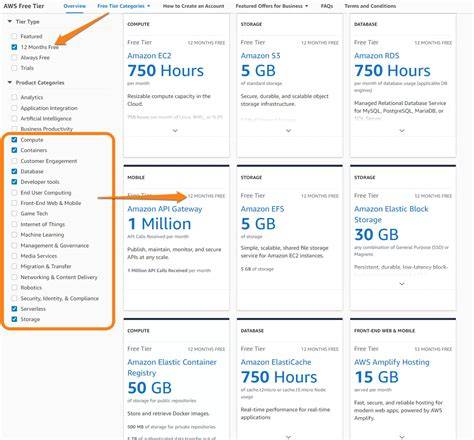
- Invocation Count: How many times your Lambda function is triggered and executed. AWS offers a generous Free Tier of 1 million free requests per month, which is fantastic for many small-to-medium dynamic sites or backend APIs. Beyond that, you pay per million requests. This model is incredibly cost-effective for event-driven architectures where functions only run when specific actions occur (e.g., a user uploads an image, a form is submitted, an API endpoint is hit). If your function is called infrequently, your invocation costs will be minimal.
- Execution Duration: This is the total time your code runs, measured from when it starts executing until it returns or otherwise terminates, rounded up to the nearest millisecond. You pay per GB-second. This means both the memory allocated to your function and how long it runs directly impact this cost. A function that runs for 500ms with 128MB of memory will cost less than one that runs for 2 seconds with 512MB of memory. This is why optimizing your Lambda code for efficiency and minimizing execution time is absolutely crucial for cost control. Bloated code or inefficient database queries can quickly inflate this part of your bill.
- Memory Allocation: When you configure a Lambda function, you specify the amount of memory (from 128 MB to 10,240 MB) that will be allocated to it. This memory directly influences the CPU power available to your function – more memory often means more CPU. You pay for the memory provisioned for your function, multiplied by its execution duration (hence, GB-seconds). The trick here is to find the sweet spot: allocate enough memory for your function to perform efficiently without over-allocating, which would mean paying for resources you don't use. AWS provides tools to help you optimize this, like Lambda Power Tuning.
- Backend APIs for single-page applications (SPAs) or mobile apps.
- Image processing (e.g., resizing uploaded images).
- Form submission handling.
- Scheduled tasks (e.g., sending daily newsletters, generating reports).
- Real-time data processing.
#### Amazon Lightsail: Simplified, Predictable Web Hosting Pricing
For many beginners, small businesses, or those migrating a simple WordPress site, the sheer complexity of EC2, RDS, S3, and all the other AWS acronyms can be overwhelming. This is where Amazon Lightsail swoops in like a superhero with a straightforward, fixed-price cape. Lightsail is designed to be an easy-to-use, all-in-one cloud platform that bundles everything you need to get a website or simple web application up and running quickly.
The core of Lightsail's appeal, and its pricing model, is fixed monthly plans. Unlike the granular, pay-as-you-go model of EC2 where every component is billed separately, Lightsail offers pre-configured "bundles" that include:
- A virtual server (VPS): This is your compute instance, with a set amount of CPU, RAM, and SSD storage.
- SSD-based storage: For your operating system, application files, and data.
- Data transfer allowance: A generous amount of inbound and outbound data transfer. This is a huge selling point, as data transfer can be a hidden cost in other AWS services.
- A static IP address: Included, so your website's IP doesn't change.
- DNS management: For your domain.
Lightsail is ideal for:
- Beginners: It abstracts away much of the AWS complexity.
- Small websites and blogs: WordPress, Joomla, Drupal, static sites.
- Simple web applications: Basic APIs, development environments.
- Predictable workloads: If your traffic is relatively stable and within the plan's limits.
However, Lightsail does have limitations compared to the full AWS ecosystem. While it offers some scaling capabilities (e.g., load balancers, managed databases),
